A September 17, 2026 commentary from the UK's Information Commissioner's Office examines assistive technology alongside privacy, including the use of smart glasses. The ICO blog discusses the limitations of visual cues for people with little or no sight and the relative visibility of wearable cameras. It is a regulator's commentary, not a new law or a blanket approval of a product.
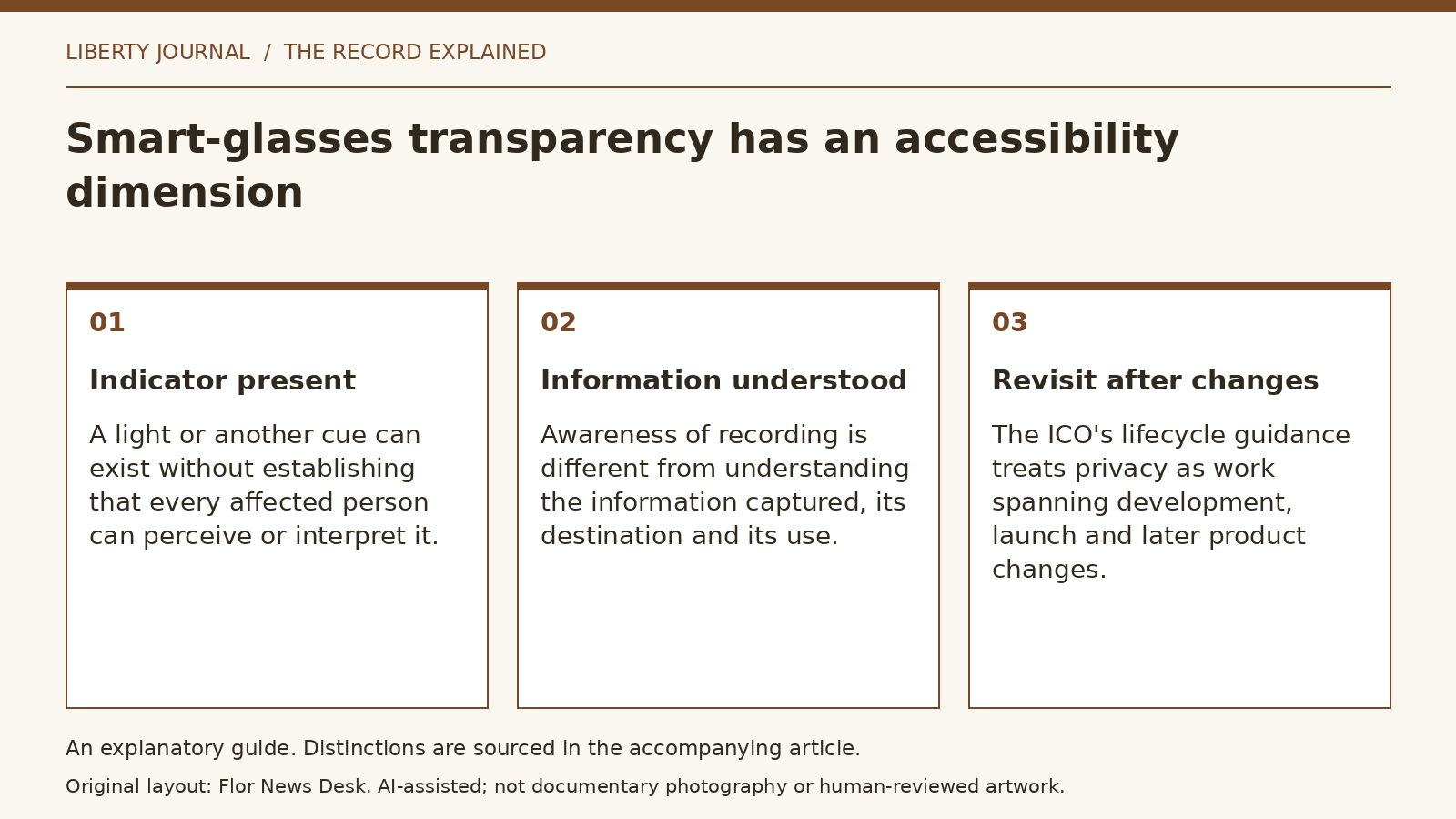
The design question is more specific than whether a device has a light. An indicator's presence is a property of the device. Whether a person can perceive it, understand it and connect it with a particular activity concerns the interaction. Those observations are related, but they are not interchangeable.
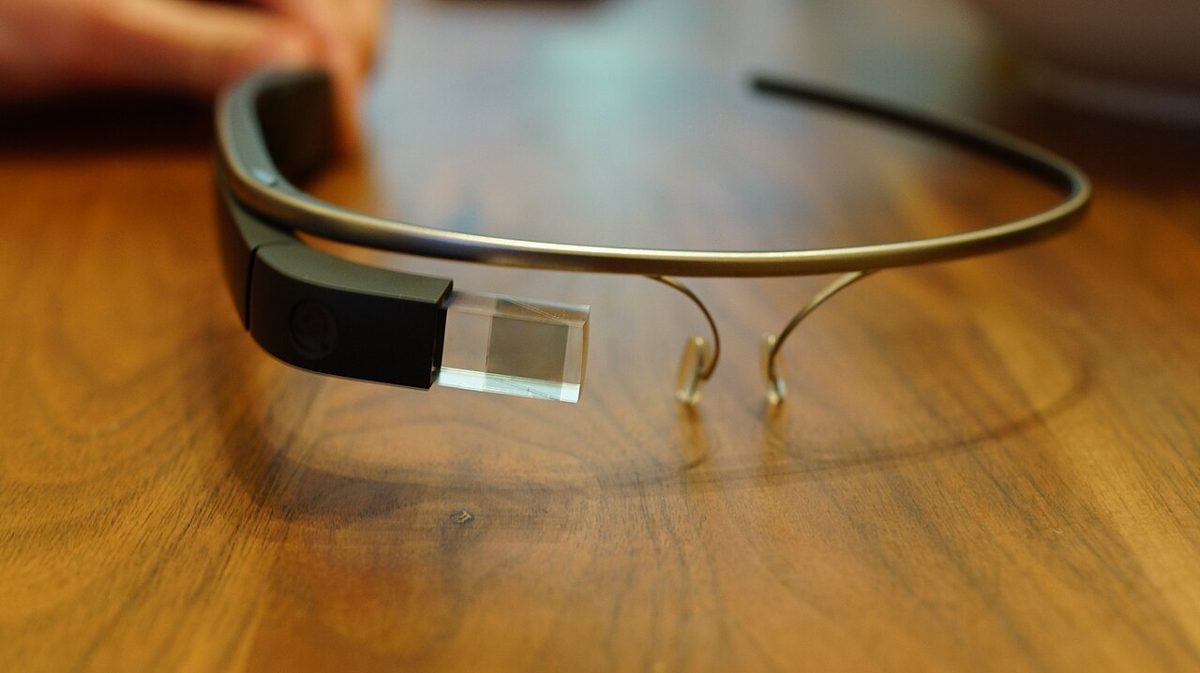
Consider a hypothetical pair of glasses that signals recording only through a small light. A laboratory photograph could establish that the light illuminates. That photograph would not establish whether a person who cannot see it knows recording has begun. Conversely, adding an audible signal would not by itself establish that everyone understands what information is being captured or where it goes.
This is an accessibility example, not a test result for any named device. It illustrates why awareness of capture, understanding of use and the ability to exercise a relevant control have to be considered separately. A product could answer one of these questions while leaving the others unresolved.
Privacy throughout the product's life
The ICO's product-design lifecycle guidance places privacy work across research, design, development, launch and post-launch activity. Aimed primarily at technology professionals in organizations acting as controllers, it distinguishes legal requirements from expected good practice and optional approaches. It also states that the material is not a replacement for the ICO's more detailed guidance.
That lifecycle perspective supplies a different unit of analysis from a launch demonstration. A demonstration shows a chosen interaction at a particular point. It does not show every environment, later software change or use of collected information. In the hypothetical glasses example, a subsequent change to capture behaviour would raise a fresh question about whether an earlier explanation still described the product accurately.
A user-facing control and a bystander's awareness also concern different people. The wearer may know that a feature has been enabled while someone nearby does not. This observation does not settle which legal obligations apply in a particular setting. It identifies why evidence about the wearer's interface alone would not establish the experience of everyone whose information might be involved.
The September blog presents both potential benefits and possible misuse. Neither category proves the outcome of every use. An assistive purpose does not logically establish that every data flow is necessary for that purpose, just as identifying a possible privacy risk does not demonstrate that an assistive function has no value. The particular activity remains the relevant subject of examination.
Both sources are ICO publications, rather than independent user research or certification of a device. They contain no usability results for the fictional product described here. The useful distinction is between a visible feature and an accessible, understandable interaction. Establishing the former is a start to describing a product; establishing the latter requires evidence about how people actually encounter and understand it.