
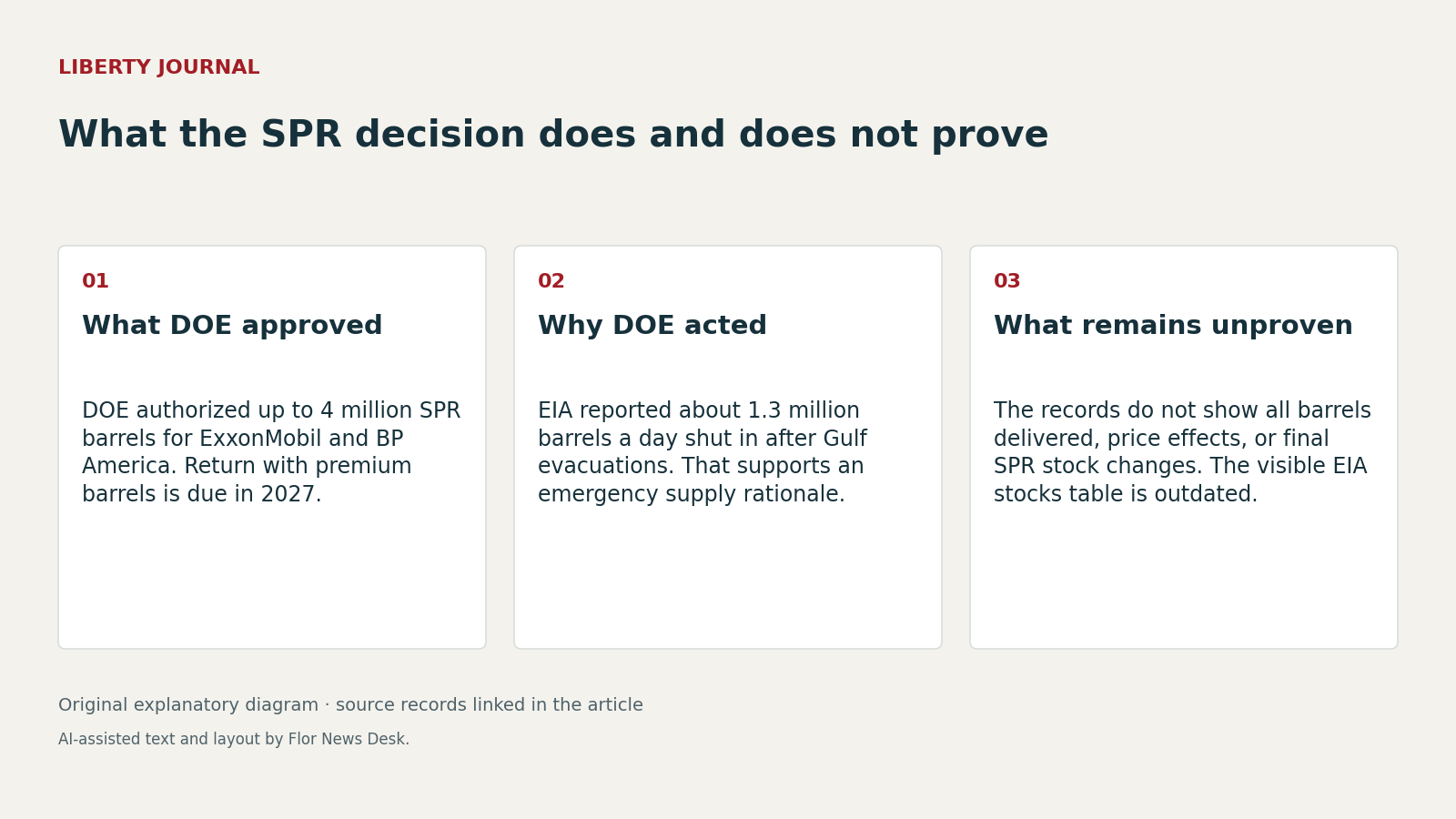
The U.S. Department of Energy took a concrete emergency step on October 10, authorizing up to 4 million barrels from the Strategic Petroleum Reserve in exchanges with ExxonMobil and BP America, up to 2 million barrels each, after hurricane-related supply disruptions. DOE said the crude must be returned in 2027 with premium barrels, and it said ExxonMobil’s portion would accelerate deliveries of previously awarded SPR crude to meet immediate needs. That establishes a real federal intervention, but only an authorized one, not a documented delivery or a measured market result. DOE authorization
The weather trigger was substantial on paper. On October 9, the U.S. Energy Information Administration said Hurricane Isaias had already affected Gulf production, with 130 platforms and rigs evacuated or moved as of October 8 and crude shut-ins of about 1.3 million barrels per day. EIA also said the storm could affect refinery operations because the Gulf Coast holds a large share of U.S. refining infrastructure. Those figures support the case that the administration was responding to a physical supply interruption, not merely trying to steer sentiment. EIA hurricane report
That distinction matters for readers who favor markets but also want credible energy security. An SPR exchange is narrower than an outright SPR sale. Based on DOE’s description, the government is effectively lending barrels into a temporary disruption and requiring repayment later with an added premium, rather than permanently disposing of inventory at once. In analysis, that makes this action easier to defend as short-term logistical relief than as a long-term price-management policy. The available record shows a storm, an authorization cap, named counterparties and a repayment structure. It does not show a broader change in federal supply policy. DOE authorization
The same caution applies to household and business impacts. If crude reaches refiners that would otherwise face interruptions, the practical aim is to keep fuel moving and limit shortages. But the public documents here do not establish whether all authorized barrels were physically withdrawn, when they moved, whether refinery runs were preserved, or whether motorists saw any pass-through at retail. EIA’s October 9 note used forward-looking storm language that was current then, not proof of what later happened. By October 29, 2026, that earlier expectation cannot by itself establish final outage duration, recovery speed or actual price effects. EIA hurricane report
The inventory question is also less settled than fast commentary may imply. EIA’s weekly SPR stocks series is the right type of dataset for checking reserve levels over time, but the retrieved table excerpt is truncated and visibly ends at February 2, 2024, at 358,017 thousand barrels. That means this record cannot support claims about the SPR’s October 2026 level or any stock change caused by this exchange. Without a directly retrieved current inventory record, it is safer to treat the DOE action as an approved emergency tool whose execution still needs confirmation. EIA SPR stocks table
The best reading, then, is disciplined rather than celebratory. DOE has documented a hurricane-linked SPR exchange with repayment terms, and EIA documented a serious production disruption just before that decision. That combination supports a limited energy-security story: government used the reserve as a bridge during a storm shock. It does not yet support larger claims about durable price relief, taxpayer benefit beyond DOE’s own framing, or a new investment outlook for U.S. producers. For free-enterprise readers, that is the right line to hold until more execution data appears. DOE authorization EIA hurricane report